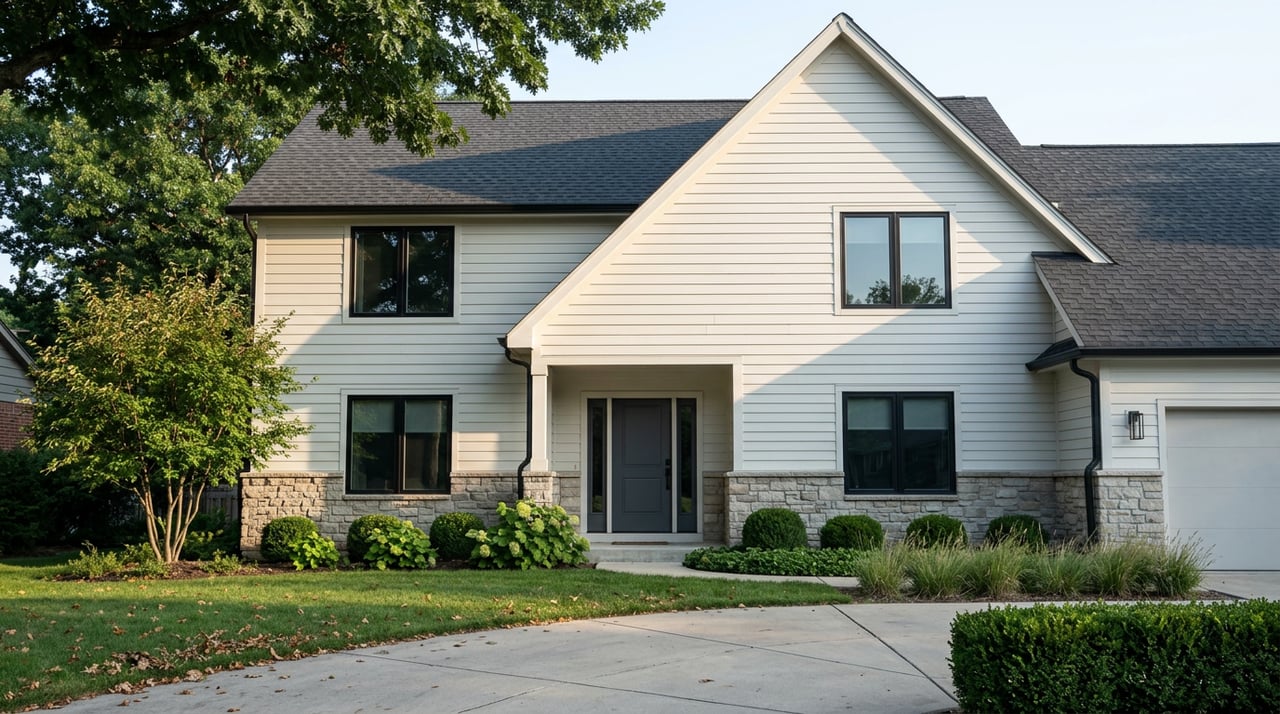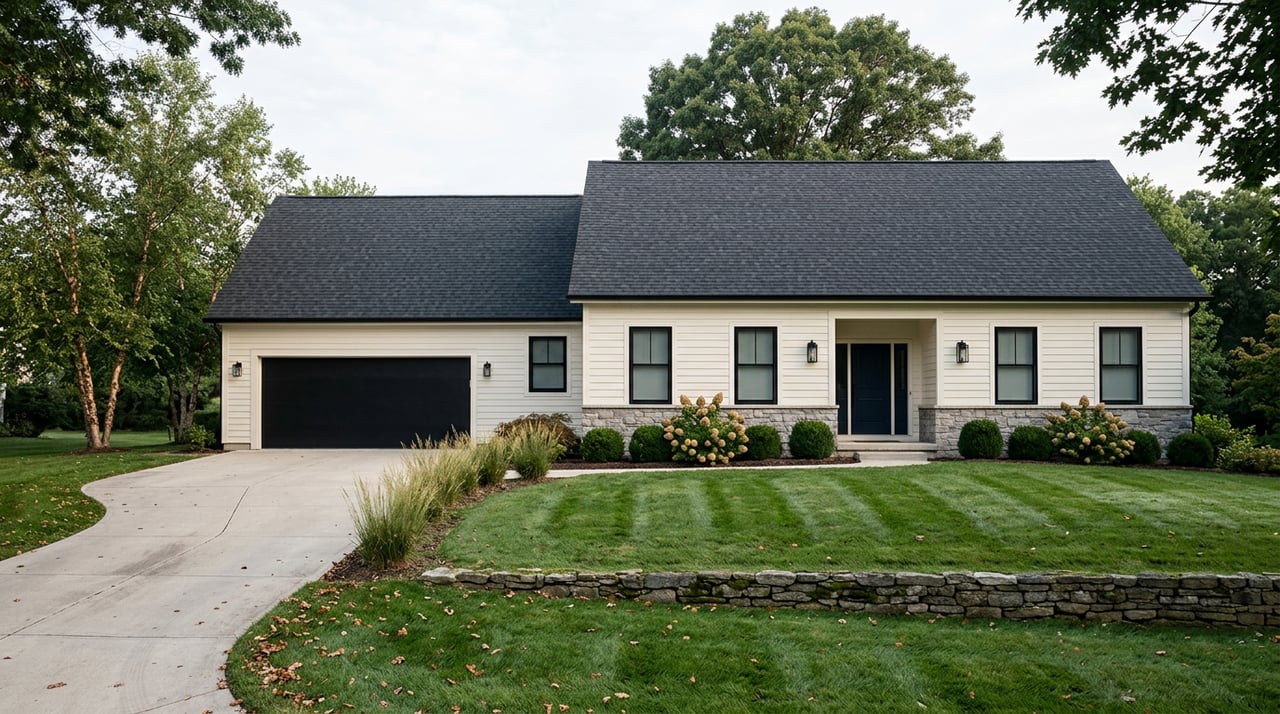
Two buyers tour homes eleven minutes apart in Hillsborough Township on the same Saturday. One house sits on a quarter acre near a newer development, connected to public sewer and water, the kind of property where the inspection contingency is mostly about the roof and the furnace. The other sits on two acres off a quieter road, and the yard has a mounded patch of grass that turns out to be the leach field. Same township, same school district, same real estate agent showing both. What happens next for each buyer is not close to the same.
That gap is the thing worth understanding before you fall for a specific address in Hillsborough. The township looks uniform on a listing search, one median price, one set of schools, one town name on the deed. It is not uniform underneath. Whether a house sits on public sewer and water or on a private well and septic system determines a different closing checklist, a different cost curve, and in some cases a different number of weeks before you get keys. Most buyers do not find out which bucket they landed in until an inspection contingency is already running.
The Split Nobody Puts On The Listing Sheet
Hillsborough has roughly 15,349 properties, and according to New Jersey Septic Management Group, which has done work across the township for years, about 84.25 percent of them sit on public sewer while 15.75 percent still rely on a septic system. That number cuts against the assumption a lot of buyers bring with them. Somerset County still reads as farmland and preserves in a lot of people's heads, so the instinct is to expect well and septic everywhere. The opposite is closer to true. Most of the township runs on the same municipal infrastructure as its neighbors.
The exception is what matters more than the rule. If your search turns up a larger lot, an older farmhouse, or anything near the township's rural edges, you are statistically more likely to be looking at the smaller slice, and that slice comes with its own procedural world that a sewer-connected buyer never has to think about.
Three Ways A Septic Sale Actually Closes
The Hillsborough Township Health Department publishes its own framework for how a septic-serviced home can change hands, and it is worth reading before you write an offer, not after.
| If the house is on septic | What it actually requires |
|---|---|
| Sell "as is" | Allowed even for a malfunctioning system, but a cesspool must be replaced at the time of transfer, and any malfunction has to be abated on a timeline the Health Department signs off on |
| Install a new system | Becomes a negotiated line item between buyer and seller before closing |
| Request a repair | The tank must be pumped at the time of inspection, or the Health Department denies the repair request outright |
That last row is where deals lose weeks. A seller who assumes their existing inspection report is good enough finds out it does not qualify for a repair permit because the tank was never pumped as part of that inspection. The buyer's timeline slips while a second inspector gets scheduled. None of this shows up in a listing description, and none of it applies to the sewer-connected house down the road.
The Well Test Isn't Optional, And It Isn't Free
If the septic system handles what leaves the house, the private well handles what comes in, and New Jersey does not leave that to chance either. Under the state's Private Well Testing Act, in place since 2002, a home that draws its drinking water from a private well cannot close until a certified lab tests it and both buyer and seller sign off on the results. This is not a courtesy inspection. It is a legal condition of the sale.
The cost runs $1,200 to $1,500 through a state-certified lab, and it covers a specific panel: coliform bacteria, arsenic, lead, and now PFAS, the so-called forever chemicals that have become a standard part of the testing requirement statewide. In Hillsborough specifically, this is not a theoretical checklist item. The township's own Health Department has flagged that arsenic and PFAS turn up in local wells at levels exceeding state drinking water standards often enough that the department secured a grant to offer reduced-cost PFAS testing to residents on a first-come basis. A buyer looking at a well-served property here should assume the test matters, not just satisfies a form.
Nobody is required to install treatment if the water fails a standard. The law's whole purpose is disclosure, not enforcement. But a mortgage lender, particularly on an FHA or VA loan, may have its own requirements before funding, which turns a failed test into a real negotiation about who fixes what before the deal can close.
Your Tax Bill Won't Sit Still Like The One Next Door
Here is the piece that surprises buyers coming from towns with a more familiar tax rhythm. Most New Jersey municipalities reassess property values every several years, in a periodic revaluation cycle, so your assessment sits mostly flat between updates. Hillsborough does something different. The township runs an annual reassessment program, which means the assessed value on your home can move every single year based on market trends, whether or not anyone has ever set foot inside to inspect it. A physical interior and exterior inspection happens on a five-year cycle, but the number on your tax postcard can change well before that inspection ever occurs.
That distinction matters for how you budget three years out. In a town with a static assessment, your tax bill mostly tracks the rate. In Hillsborough, it tracks both the rate and a value that resets annually, and the township has been explicit that a common misconception, that your assessment only changes after an inspection, is simply wrong.
For context on where that tax dollar goes, the township's own breakdown of the 2024 tax bill put 64.61 percent toward schools, 17.75 percent toward the county, 13.56 percent toward the township itself, with the remainder split between fire district and open space. If you are eyeing a larger parcel, it is also worth knowing that Hillsborough has more than 200 properties currently assessed under the state's Farmland Assessment Act, which requires a minimum of five acres in active agricultural or horticultural use and an annual filing deadline of August 1. That preferential assessment can meaningfully lower the carrying cost of a large-lot property, but only if the land use qualifies and the paperwork gets filed on time every year without fail.
What The Price Split Actually Signals
Here is where the aggregate number stops telling the whole story. Over the three months ending May 2026, the median sale price across Hillsborough Township as a whole sat at $435,000, down 6.5 percent from the same period a year earlier. Look at the 08844 zip code, which covers most of the township, over that identical window, and the median sale price was $620,000, up 22.7 percent year over year.
Those two numbers are describing the same three months in the same town, and they point in opposite directions. That is not a contradiction to untangle so much as a signal about what "the Hillsborough market" actually means. A town assembled from very different housing eras, lot sizes, and utility setups is not going to move as one line on a chart. A single median price, whichever version you're handed, is standing in for several distinct products: newer sewer-served construction, older larger-lot homes with well and septic, and a luxury tier that can swing an average on its own. Comparing "the Hillsborough median" to a house you're actually considering only works if you know which segment that house belongs to.
A Few Questions Before You Tour
How do I find out before touring whether a specific house is on septic or public sewer? Ask your agent to pull the property's utility record before you schedule the showing. It takes a phone call and saves you from falling for a house before learning it needs a different inspection timeline than you planned for.
Does new construction in Hillsborough still require a well test? Yes. The Private Well Testing Act applies to new construction on a private well the same way it applies to an existing home, and the sale cannot close without it.
Who typically pays for the well test or a septic repair? Neither the well testing law nor the septic transfer rules assign this by default. It is negotiated between buyer and seller, which means it belongs in your offer strategy from the start rather than left for the inspection period.
Buying in Hillsborough Township means buying into more than one market at once, and the paperwork that applies to your specific address depends entirely on which one you land in. If you are comparing a sewer-connected colonial to a septic-and-well farmhouse two roads over, you are not comparing two houses so much as two different transactions wearing the same town name.
Erick Gonzalez has spent eight years walking Central Jersey buyers through exactly this kind of local detail, from a septic inspection that needs a second look to a tax assessment that moved before anyone expected it to. If you're weighing a specific Hillsborough property and want a clear read on what its particular systems mean for your timeline and budget, let's connect.