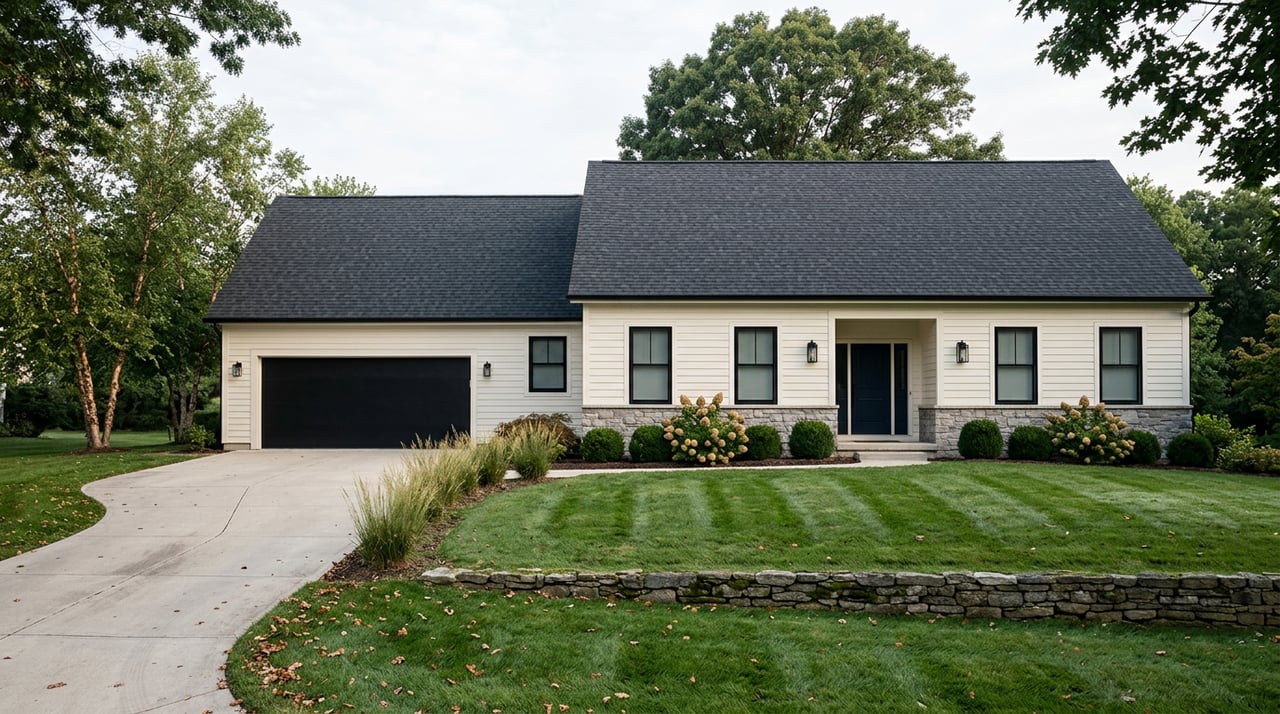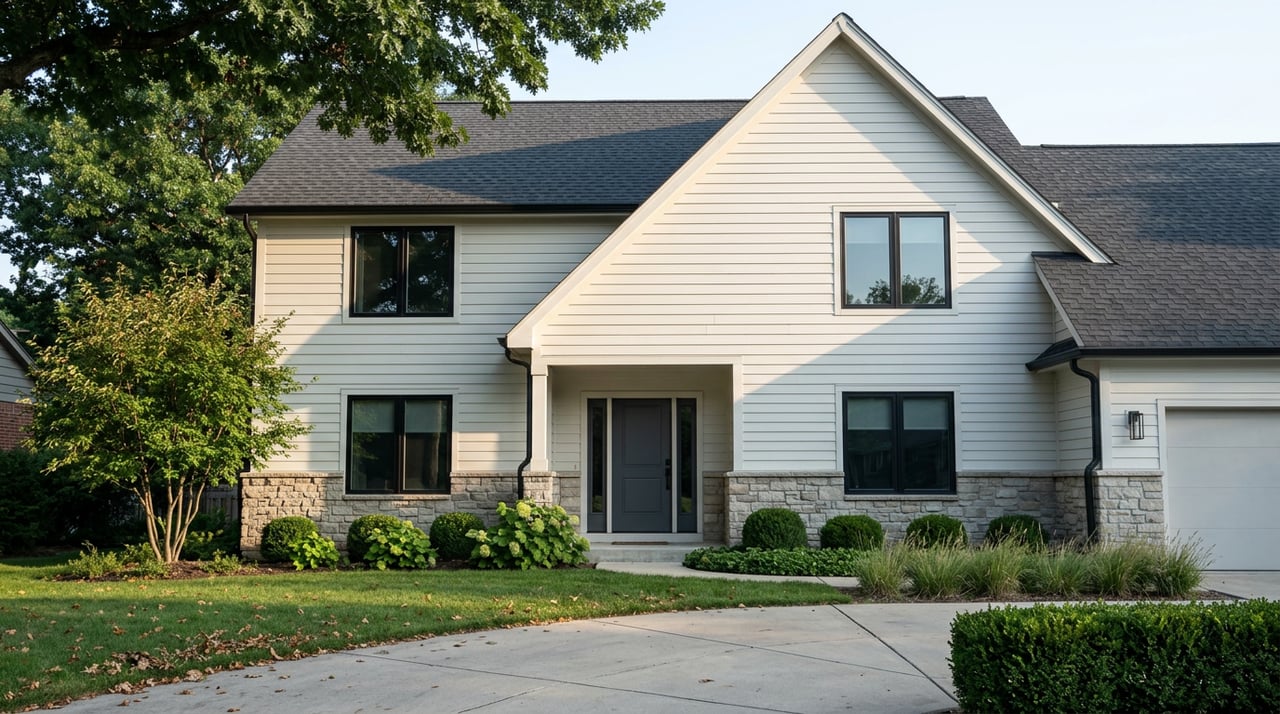
Picture two houses a mile and a half apart, both inside the same zip code, both technically in "Somerset." One sits on a quiet interior street behind Canal Walk, the 55-plus community tucked near the Delaware and Raritan Canal. The other sits closer to Elizabeth Avenue, within earshot of a Business-Industrial zone that has spent the last eight years fielding warehouse proposals. Both homes could sell within a few thousand dollars of the town average. Only one of them carries a truck-route risk the average will never show you.
That gap is the story worth understanding if you're comparing Somerset against other Central Jersey towns right now, because the average home value here, $581,943 as of late July 2026, up 2.2% over the past year, is a single number standing in for a place that is not really one place. Somerset is the unincorporated section of Franklin Township, Somerset County, and Franklin Township just spent nearly a decade arguing over where industrial development stops and residential neighborhoods start. That argument produced a real zoning ordinance this year, and it left a paper trail of exactly which blocks were at risk and which weren't.
One Average, Two Very Different Blocks
Franklin Township's own planning department has been direct about this for years: since 2018, the township has fielded more than two dozen applications for new or expanded warehouses, totaling several million square feet. Some of those proposals landed in the middle of existing light-industrial areas near I-287, where truck traffic never touches a residential street. Others were proposed close to homes, schools, and senior communities, in spots where delivery trucks would have had to cut through neighborhoods to reach a loading dock.
That distinction, buried in a planning department memo rather than a listing sheet, is exactly what a townwide average can't capture. Two homes with similar square footage and similar lot size can carry very different long-term outlooks depending on which side of that line they sit on.
Eight Years, Two Dozen Applications, Three Names Worth Knowing
The clearest way to see the split is through the specific projects that actually got proposed. During a June 2026 Franklin Township Council hearing on new warehouse zoning rules, a resident walked the council through a list of 27 warehouse applications filed between 2023 and 2025 alone. Only nine, the resident said, would have qualified under the size and location limits the township was about to adopt.
Three of the projects that would not have qualified are worth naming, because they show exactly what "close to a residential zone" means on the ground. One was a roughly 437,000-square-foot Duke Realty warehouse proposed on Elizabeth Avenue, adjacent to a school. Another was a warehouse proposed next to Canal Walk, the gated 55-plus community of more than 1,000 homes near the canal. A third would have been situated between Somerset Run, the 755-home Del Webb active-adult community on Stone Manor Drive, a nursing home, and a ShopRite.
None of those three were built. But the fact that they were seriously proposed, and got far enough to be cited by name in a public council hearing, tells you something the average sale price never will: parts of Somerset sit close enough to industrial-zoned land that a 400,000-square-foot warehouse was a live possibility within the last three years.
One resident who supported the new rules put it plainly at that same hearing, calling the compromise "a very good step, not perfection." That's a fair summary of where things stand.
What Changed in June 2026
The Franklin Township Council voted 6-3 in June 2026 to adopt Ordinance 4507-26, which rewrites the rules for the township's Business-Industrial zone. The two headline changes:
Warehouses are no longer a permitted use by right in the B-I zone. Any new proposal now needs Planning Board approval, which means a public hearing, a site plan review, and a formal vote rather than an administrative sign-off.
New facilities are capped at 150,000 square feet, a fraction of the size of some of the proposals that alarmed nearby residents in prior years.
The ordinance also left the loading dock ratio, one high-volume loading dock per 5,000 square feet of gross floor area, in place, though at least one resident at the hearing asked the council to revisit that number in the future.
Here's a simple way to see what actually shifted:
| Before Ordinance 4507-26 | After Ordinance 4507-26 | |
|---|---|---|
| Warehouse approval in B-I zone | Permitted by right, no public hearing required | Requires Planning Board approval and a public hearing |
| Maximum new facility size | No cap, some proposals exceeded 400,000 sq ft | Capped at 150,000 sq ft |
| Applications matching current standard | 9 of 27 filed 2023-2025, per resident testimony at the hearing | New filings must comply from adoption forward |
The ordinance is not retroactive. It doesn't undo anything already built, and it doesn't touch warehouses that received approval before June 2026. What it does is change the odds for anything proposed from here forward, and it gives residents and buyers a public hearing they didn't automatically get before.
The Corridor That Cuts Through the Middle
Warehouse zoning isn't the only thing reshaping how different parts of Somerset actually live day to day. Hamilton Street, also known as County Route 514, runs about 1.7 miles through Franklin Township from Vanderbilt Avenue to the New Brunswick border, and Somerset County has a safety improvement project moving through design for that stretch right now. The corridor is a genuine mix, retail plazas, auto repair shops, churches, and both detached single-family homes and multi-unit residential buildings sitting close together, with a posted speed limit that shifts from 35 mph to 25 mph as you cross into the more residential eastern half near Franklin Boulevard.
The planned fixes include curb extensions to shorten pedestrian crossings, new rapid flashing beacons, and upgrades to four traffic signals, all aimed at a corridor that carries both delivery traffic and foot traffic in the same quarter mile. If you're comparing a house that fronts Hamilton Street to one a few blocks off it, this is the kind of detail that matters more than the county's median sale price, because it tells you whether the road in front of your house is actively being redesigned for safety or has already settled into its final form.
How to Actually Check a Parcel Before You Fall for the House
None of this means avoiding Somerset. It means asking sharper questions about a specific address instead of relying on the town-wide number. A few habits worth building into any home search here:
Pull up the parcel on Franklin Township's zoning map before you tour, not after you make an offer, and check how close it sits to a B-I zone boundary.
Ask whether the property is within the roughly one-mile corridor near I-287 that the new ordinance and prior testimony both treat as the relevant buffer distance for truck traffic.
Search the Planning Board's application archive for the specific block. Recent case files show whether a warehouse, self-storage facility, or mixed-use redevelopment has already been proposed nearby, even if it was withdrawn or denied.
If the home fronts Hamilton Street, ask about the county's safety improvement timeline rather than assuming today's traffic pattern is permanent.
A Few Straight Answers
Does the new ordinance apply to warehouses that already have approval? No. Ordinance 4507-26 governs new applications going forward. Anything approved before June 2026 isn't affected by the size cap or the change from by-right to Planning Board approval.
Does this mean Canal Walk or Somerset Run are at risk again? Both communities are established, built-out 55-plus neighborhoods, not vacant B-I parcels. The warehouse proposals that named them as neighbors were on nearby land, not inside either community. The relevant question for a buyer is always the specific parcel next door, not the neighborhood's reputation.
Should I rule out homes near the B-I zone entirely? Not necessarily. Plenty of B-I-adjacent land in Franklin Township sits near I-287 with no need for truck traffic to cross residential streets, and the new 150,000-square-foot cap and public hearing requirement both work in a buyer's favor going forward. The point is to check the specific parcel rather than assume the town average tells the whole story.
If you're weighing a specific block in Somerset against something in Bridgewater, Piscataway, or another Central Jersey town, this is exactly the kind of digging worth doing before you write an offer. I've spent eight years walking Middlesex and Somerset County buyers through zoning maps, Planning Board files, and the questions that don't show up on a listing sheet. If you want a second set of eyes on a specific address, or want to understand what a parcel's zoning history says about its future, Erick Gonzalez is glad to help. Let's Connect.